I clearly remember when the original Macintosh was unveiled in 1984. It was more than just a piece of technology, it was a bold declaration by Steve Jobs that computing was now for literally everyone. With its graphical user interface (GUI), the Macintosh turned what was once the exclusive domain of the technically adept—taking orders solely through arcane text commands—into a immediately accessible and intuitive visual experience. At the time, I recall that this leap was not without a good number of skeptics, many of them with vested skills who liked the inherent barriers of entry to computing. Others at the time believed the GUI to be a mere gimmick, a dead-end in the face of “serious” computing models.
I was a budding software designer myself back then, and I had plenty of experience on the command-lines of the day. But when I started to use my first Macintosh, I realized almost immediately that we had now entered a completely new era. An era where computing was going to be forever visual. I was struck at the time how the visual interface was really a high bandwidth conduit right into the human mind. There was so much more you could experience than with just a screen of characters, and it was so much faster. And it went both ways, input was infinitely more exploratory and revealing. Syntax errors were replaced with easily-clicked functionality.
What’s Old Is New Again: Symbolic Interaction
Yet, as a software architect and thought leader who has witnessed and contributed to the myriad transformations in technology over the last forty years—including the eventual rise of mobile and social platforms to the current era of AI-as-UI—I can see the original Macintosh was more than just a significant footnote in history but the harbinger of the many fundamental shifts that would follow. The 40-year journey from the playful but profound simplicity of the initial Macintosh to the sophisticated and similarly very nascent capabilities of today’s equally visionary Apple Vision Pro neatly bookends a period of unprecedented innovation in visual interfaces and reimagining of human-computer interaction.
In short, the GUI genuinely did what it set out to do: It truly democratized computing. It made technology accessible and personal, laying the groundwork for the subsequent mobile revolution that would bring computing into our pockets with new, even easier user interfaces made of touch and voice. Social media platforms capitalized very well on these intuitive interfaces, connecting billions and embedding computing even deeper into the fabric of daily life, for the better and then sometimes, to my regret, for the worse.
Throughout these shifts, my role has steadily evolved from designing systems within predefined paradigms to questioning and redefining exactly what those paradigms should be. Is there an end-state to this journey? Where are spatial computing and AI actually taking us? Just asking this question will reveal vital insights to aid our passage, a topic of my current research.
Today, we are now fully in the resurgence of the command line, powered and made far more workable again by AI. It marks a fascinating turn in this ongoing evolution. Far from the hard-to-master command lines of the past, today’s AI-driven interfaces are as approachable as the GUI, but often more profound: Conversational, capable of understanding and generating sophisticated natural language.
AI-as-UI represents a full digital realization of the most ancient and powerful mode of human interaction: Symbolic dialogue. Unlike the static command lines of old, these AI interfaces are dynamic, learning and adapting to the user’s needs in real time. They democratize computing in a way the original GUI only hinted at, tapping into radically advanced computational capabilities now accessible to anyone with the ability to ask a question.
Maximization Is Not the Path: Simplicity Is
However, as we marvel at the capabilities of AI, I believe it’s crucial to consider the places where the GUI—and its three-dimensional evolutions in virtual and augmented reality—may have overreached. The push towards ever more immersive 3D environments has, in some instances, prioritized spectacle over substance, complexity over clarity. This is not to dismiss the potential of spatial computing in any way. I believe it’s a major part of our future. But I wish to caution against losing sight of good user experience in the rush towards technological maximalism. As many designers would tell you, the most profound innovations often come not from adding complexity but from removing barriers, a lesson the Macintosh taught us four decades ago. It’s one of the reasons that I’ve added simplicity maximization as one of my most important trends for the Future of Work in 2030.
Our User Experiences Risk Getting As Complex As Our Minds. Image: DALL*E 3
Amidst these reflections, I find that in my research that the role of AI stands out not as a competitor to spatial computing but as a highly complementary force. AI has the potential to make spatial computing more intuitive, more nuanced, deeply personalized responsiveness to our needs, and ultimately more, well, human. By integrating AI’s understanding of language and context with spatial computing’s immersive capabilities, we will create effective environments that are not only visually and interactively rich but also deeply personalized, far more potent to use, and highly accessible.
From where we are today, the intertwining paths of AI and spatial computing is what actually represents the cutting edge of digital experience. They are not at odds, but are instead two sides of the same coin. Each will push the other towards greater heights and major new breakthroughs. Importantly, one (AI) can return simplicity to the other (spatial computing.)
No, the challenge and opportunity for us as architects of these digital realms are to ensure that these technologies properly reinforce and complement each other in ways that enhance human capabilities and enrich our lives. Our immersive experiences will have AI interfaces. In the end, it’s as I’ve started to remind people lately, if all this tech is not here to serve humans well, it does not have much of a purpose.
So, as we chart this course, I’d like us to remember the lessons of the original Macintosh and now the Apple Vision Pro and ChatGPT as well as crossovers like Mobeus: That the true power of technology lies not in its complexity but in its ability to connect with us, to understand us, and to make the once unimaginable a part of our everyday lives. To the extent spatial computing and AI manage to keep us on this road towards progress, they will flourish and open up the future.
Throughout this year, I’ve been carefully observing the seismic shifts in the realm of work, spurred by ongoing economic uncertainties and the rapidly evolving technology landscape. Both of these factors has made it unusually challenging this year to anticipate the forthcoming trends and paint a clear picture of the future of work in 2024. Yet, amid the turbulence, I believe the pivotal shifts have begun to crystallize, illuminating the path ahead in the digital workplace, as workplaces continue to traverse the top-level shift to hybrid work.
Two closely-watched reports this year, the McKinsey Global Institute’s “The Future of Work After COVID-19” and the World Economic Forum’s “Future of Jobs Report 2023,” have unveiled significant insights about the trends I’ve observed in 2023 that will undeniably mold the digital workplace in 2024. Accordingly, I note that there has been three major shifts: A significant surge in the adoption of advanced technologies in the workspace, a heightened focus on employee well-being, and especially the rise of remote and hybrid work models. These priorities are not only reshaping our present work environment but also setting the stage for a more digitized, flexible, and employee-centric future.
As we gear up for 2024 and as I having budget conversations with CIOs and digital workplace teams, it’s becoming increasingly evident how these key shifts will unfold into next year’s trends. The accelerated adoption of AI, machine learning, and data analytics will continue to automate tasks of every kind, giving employees the liberty to engage in more strategic and creative endeavors.
On the other hand, the continued commitment to employee happiness (typically viewed through the lens of retention activities), coupled with the rapid expansion of remote and still largely-unproven hybrid work models, will ultimately cultivate a more inclusive and flexible work environment, even though we largely aren’t there yet. These progressive transformations will empower employees, drive productivity, and can genuinely foster a culture of innovation and resilience for those that embrace them. As we embark on next year’s journey, leaders and workers both will need to keep an open mind, adapt, and learn, for the future of work in 2024 actually holds great promise and potential in its uncertainty.
What Will 2024 Hold When It Comes to Digital Workplace and Employee Experience?
I’ve identified eight trends that I believe will be the most overarching and important for organizations to grapple with successfully. While there are more trends than this, if organizations just buy down progress towards most of these eight in a meaningful way next year, it will be a definitive win for them, given so many simultaneous threads that IT, HR, and digital workplace teams currently face.
The following are the eight trends most likely to make a real difference and improve not just the quality of digital employee of experience but provide substantial business benefits to those that adopt them. They will also aid in attraction and retention of leading talent next year, probably the most important issue of all.
1. AI Work-Enablement
Since ChatGPT entered the work landscape late last year, I’ve been closely observing the paradigm shifts created by the rapid rise of generative artificial intelligence. The myriad capabilities AI brings to the workforce are expansive and truly transformational. Yet, as with any potent technological advancement, it also presents its unique set of challenges. Over the next two years, I believe we’re poised to witness the true essence of AI’s potential and the ways it will enable and empower the workforce.
Firstly, AI is set to enhance the tactical efficiency and productivity of our workforces by automating repetitive tasks. AI will thus liberate workers from mundane duties, providing them more time to engage in strategic and creative undertakings. This reallocation of human capital to areas where they truly shine is likely to significantly boost productivity and job satisfaction. On the flip side, this shift will necessitate reskilling and upskilling efforts, to prepare workers for these elevated roles.
Furthermore, AI is set to revolutionize decision-making processes. With advanced analytics and prediction capabilities, AI can offer managers and executives crucial insights that drive more informed and strategic decisions. However, the challenge lies in maintaining the right balance between human intuition and AI-guided decision-making, ensuring we don’t compromise on the human touch in our operations.
Lastly, the advent of AI in the workplace promises more personalized and effective training and development programs. Leveraging AI’s ability to adapt to individual learning patterns, businesses can create personalized training content that resonates with every worker. Yet, the successful implementation of such systems requires robust infrastructure and careful data privacy considerations.
Accenture’s seminal report on AI, “Reworking the Revolution“, further supports these observations, underscoring that AI, if used strategically, holds the potential to boost business revenues by an estimated 38% and employment by 10%. In short, AI’s advent in the workforce presents both exciting opportunities and substantial challenges. As our workplaces venture into this new era, we must strive to maximize its benefits while consciously navigating its hurdles. That said, I’m also seeing real reservations about blindly deployed generative AI in the workplace. I’ll be releasing some new data on this topic soon.
2. Delivering on the Promise of Digital Employee Experience
As we venture deeper into the digital era, it is becoming apparent that crafting robust and usable digital employee experiences isn’t merely an option, it’s now a necessity. Work is digital, today. While we have made significant strides in this arena, there’s still significant work to be done in most organizations, especially when it comes to integration, design, analytics feedback loops, support for hybrid work, and of course, the integration of AI.
When it comes to integration, we need to create more unified digital workplace environments that promotes seamless interaction between different systems and tools. The goal should be to ensure that the digital workplace mirrors the interconnectedness of tasks in the physical workspace. However, integration is a challenging endeavor, especially considering the vast array of tools and platforms in use today. Nevertheless, the benefits — improved workflow, enhanced productivity, and reduced redundancy — are worth the effort. Achieving this is also far easier now due to recent technical advances.
Design, on the other hand, demands a far more empathetic user-centric approach than we’ve typically used in digital workplace or employee experience. We need to ensure that our digital tools are not just functional, but also intuitive and aesthetically pleasing. Poorly designed digital work experiences can lead to inefficiencies and frustration among employees, hindering rather than promoting productivity. However, good design can increase user adoption and satisfaction, making the digital workplace a more engaging and productive environment. I also see that, as EX and CX efforts blur, CX-style journey mapping is appearing more often in digital workplace design.
We also need to improve our feedback loops from analytics. Organizations are collecting vast amounts of data, but most efforts are not leveraging it as effectively as they could be. With better analytics feedback loops, organizations can gain more insights into employee behavior and preferences, allowing them to refine our digital tools and strategies to better meet their needs.
Finally, we must not overlook the specific needs of hybrid work. The digital tools we provide need to support remote work as effectively as they support in-office work. This might include features for remote collaboration, project management, and even social interaction.
In a recent report by Harvard Business Review, the importance of all these factors is reinforced. It highlights that a thoughtfully designed digital workplace can enhance employee engagement, productivity, and satisfaction, ultimately driving business growth. As we look forward to 2024, it is essential to tackle these challenges head-on, to fully harness the potential of the digital workplace. For many of us, it’s vital to finish a job that started when COVID remade the workplace suddenly and dramatically in 2020.
3. Autonomous Business Digitization and Operations
As we move deeper into the world of automation in the workplace, we stand on the cusp of a revolution characterized by pervasive automation and something known as hyperautomation. The very way we perceive and conduct work is poised for a transformative shift, driven primarily by democratized platforms and AI-enabled automation. These emerging technologies are set to rethink operations across industries. This will catalyze efficiency, productivity, and innovation in the process.
One of the critical levers of this impending revolution is the democratization of a new generation of automation platforms, especially those built around the model of low code. These platforms aim to make automation accessible to everyone, regardless of their technical expertise. By employing user-friendly interfaces and intuitive design, these platforms enable workers across all levels of an organization to design and implement automated processes. This form of democratized automation could profoundly enhance operational efficiency and empower employees to take greater control over their work processes. However, the challenge lies in ensuring adequate training and cultivating a culture of acceptance and adoption. This is not a theory about what might come. I’m seeing this actively in my practice, as I’ve been exploring recently.
AI-enabled automation is another major force in this automation revolution. It takes automation to the next level by allowing systems to learn from data, adapt to changing circumstances, and make intelligent decisions. From predictive maintenance in manufacturing to intelligent customer service in retail, AI-enabled automation is reshaping operations across many sectors. Yet, it brings its own set of challenges. Ethical considerations, data privacy concerns, and the fear of job displacement are some hurdles that we need to navigate conscientiously.
Hyperautomation extends automation beyond routine tasks to adaptively encompass more complex operations. By combining AI, machine learning, robotic process automation (RPA), and other advanced technologies, hyperautomation aims to automate almost any repetitive task. The benefits are immense, including cost savings, enhanced accuracy, and freeing up employees for more strategic tasks. However, hyperautomation requires significant upfront investment and ongoing maintenance, which can be a deterrent for some organizations. Day-to-day IT operations and business operations will be most transformed by this trend.
4. Improved Digital Onboarding and Adoption
Digital transformation continues to sweep across the business landscape, with most organizations hovering between early successes and just building a head of steam according to my CIO surveys. In this era of rapid change, improving digital employee onboarding and sustaining momentum through digital adoption platforms is becoming increasingly critical to move quickly in getting newly hired/contracted workers adapting and existing ones better absorbing change. These two focus areas present the ripest untapped opportunities, or the “low hanging fruit,” for organizations to improve the immediate impact of the digital workplace on workers as they initially come on board and progress through their worker lifecycle.
A smooth and effective digital onboarding process is essential in setting the right tone for a worker’s journey in an organization. In a digital workspace, traditional onboarding methods typically fall short, making it imperative for organizations to design a more tailored, interactive, and digitally adept onboarding experience. This not only ensures that new hires are well-acquainted with the digital tools and processes they will be using, but also boosts their confidence, productivity, and job satisfaction right from the start.
The benefits of digital onboarding extend beyond the initial phase of a worker’s journey. A strong start sets the stage for continued growth and productivity, leading to higher employee engagement and reduced turnover. However, to sustain this momentum and ensure employees continue to use digital tools effectively, organizations must invest in digital adoption platforms, the easiest way to keep them climbing the learning and productivity curve
Digital adoption platforms provide ongoing support and learning to employees, helping them to understand and utilize digital tools effectively. These platforms typically use interactive guides and in-app support to provide real-time assistance, reducing the learning curve and enhancing user engagement. The benefits include improved productivity, higher user adoption rates, reduced support costs, and an overall improved digital experience.
In a world where the digital workplace is becoming the norm, focusing on these aspects can provide organizations with a significant return on investment. Not only do they enhance the employee experience, but they also increase the overall efficiency and effectiveness of the digital workplace, leading to substantial improvements in organizational performance.
As we continue to navigate through our new, more distributed organizations, we are learning from early experiments, refining our approach, and adjusting our hybrid work models and culture. The goal is clear: To balance and optimize work from anywhere for productivity and well-being. However, the path to achieving this balance is still fraught with challenges and demands innovative thinking, strategic planning, and a willingness to adapt.
One of the key issues with hybrid work is maintaining a cohesive and inclusive culture. In a hybrid work environment, which most organizations are today, fostering a sense of belonging and maintaining consistent communication can be challenging. To overcome this, organizations are leveraging technology to create virtual water cooler moments and maintain regular touchpoints with their teams. The lessons learned in the industry point towards the significance of empathy and understanding in leading remote teams. Virtual team building activities, regular check-ins, and open communication channels can help maintain a strong team dynamic. Visual collaboration is also becoming a leading tool for bringing teams closer together, and I’ll have a report out soon taking a look at this.
Another challenge is managing productivity and work-life balance. The lines between work and personal life can blur in a hybrid setup, leading to burnout and reduced productivity. Organizations are learning to set clear boundaries and expectations, while also providing flexibility to employees. Tools for project management, time tracking, and productivity analytics are being employed to monitor and enhance productivity without infringing on personal time.
Lastly, the physical and mental well-being of employees has come into sharp focus in a hybrid work setup. This has highlighted the need for robust wellness programs and mental health support. The benefits of addressing these challenges are very non-trivial. Apart from improved productivity and employee satisfaction, a well-managed hybrid work model can attract and retain top talent, reduce overhead costs, and foster innovation.
In the face of these challenges, organizations must continue to learn and adapt in 2024, refining their hybrid work models, while leveraging technology and feedback to create a balanced and effective work-from-anywhere culture. The journey has been and will continue to be challenging, but the potential rewards make it a worthwhile endeavor, and mutually reinforce several of the other trends on this list.
As we journey further into the digital age, the very nature of employment is undergoing a profound shift. Traditional career paths are giving way to more dynamic, fluid, and personalized models. Both the nature of a career and work assignments themselves are evolving to be more gig-centric and marketplace-based, ushering in a new era of on-demand work. This shift is not only changing the way we work, but it’s also fundamentally reshaping the concept of a career itself.
Gig-centric and marketplace-based work models provide a greater degree of flexibility and control to workers. They can choose projects that best align with their skills, interests, and work-life balance. This is a stark contrast to traditional models where the trajectory of a career was largely pre-determined and rigid. The gig economy offers an element of dynamism, enabling workers to continually reinvent their career paths based on their evolving interests and life circumstances.
On the flip side, this shift also benefits employers. They get access to a diverse talent pool equipped with the latest skills. Furthermore, workers in the gig economy are often highly engaged because they choose projects they are genuinely interested in. This can result in improved productivity and innovative outcomes. I’ve examined the data from several hundred white collar gig economy projects in a rigorous analysis and these points are borne out in hard data. While the shift is very uneven, I’ve seen IT and professional work in particular shift steadily towards this model in recent years, and a cottage industry of white collar gig marketplaces form.
Yet, this new career model also comes with challenges. Issues around job security, benefits, and the lack of a predictable income are areas of concern. Addressing these concerns will require reimagining labor laws and employment practices. Despite these challenges, the shift towards a more dynamic, marketplace-centric, and on-demand model of work is gaining momentum. As we embrace this new reality, it’s clear that the future of work is not just about where and how we work, but also about the very nature of what we consider a career.
7. Proactive Management of EX and CX in a More Unified Model
The digital age has unleashed a multitude of transformations in the business landscape, a key one of which is the increasing overlap between customer experience and employee experience. Although I’ve projected it for a long while, as organizations chart their course into 2024, I’m finally seeing this emerging companies are preemptively managing both realms in a more unified way. The recognition is growing that an enhanced employee experience is not just a perk, it directly translates into improved customer satisfaction and loyalty. Never mind that from a brand, design, development, platforms, and orchestration perspective, it make great sense to coordinate the efforts.
As we’ve seen in our annual AXS conference, which I help chair, organizations are now recognizing that the experiences and engagement levels of their employees can significantly impact the customer experience they deliver. It’s not just that employee experience is used to deliver a great deal of customer experience. It’s that engaged employees who feel valued, respected, and supported are more likely to exhibit a higher level of commitment and dedication to their roles, resulting in better service to customers. It’s the basic principle of internal service quality: Treat your employees well and they, in turn, will treat your customers well.
In the past, challenges in achieving this included disparate data sources, inadequate technology, and the lack of a cohesive strategy to link employee experience with customer experience. However, recent advancements in AI, data analytics, and digital experience and integration platforms are overcoming these hurdles. These tools are providing insights into both customer and employee experiences, enabling organizations to identify gaps, implement changes, and monitor the impact in real-time.
I predict 2024 will be a banner year for this approach. The convergence of employee experience and customer experience is poised to create a win-win situation: Happier employees, satisfied customers, and consequently, successful organizations. It’s an exciting time for businesses willing to embrace this holistic approach to experience management, signaling a major shift in their strategic focus. As we move forward, this blurring of lines between the customer and employee experiences is expected to create a more harmonious and productive business environment.
8. Worker Flexibility and Inclusion
In 2024, workplace flexibility and inclusion will continue to strongly emerged as two intertwined leading trends. Each of these are shaping the future of work and are, in essence, redefining how we perceive and interact within our workplaces. The workplaces of the future will span increasingly broader human and technology dimensions, accommodating not only hybrid workers in highly distributed environments but also individuals from a vast array of diverse backgrounds.
Workplace flexibility, empowered by advances in digital technologies and collaborative tools, has been a key driver for the shift towards hybrid working models. This shift has offered workers the freedom to tailor their work schedules and environments to best suit their needs, thereby enhancing productivity, engagement, and well-being. In parallel, we are witnessing an increased focus on diversity and inclusion. Companies are recognizing the value of a diverse workforce and are making concerted efforts to create an inclusive culture where everyone feels valued and heard.
The confluence of these trends is creating a workplace ecosystem that is not only flexible but also inclusive, fostering more dynamic, innovative, and representative teams. In this model, team members are not bound by their geographical locations, and the collaboration occurs across time zones and cultural boundaries. This fluidity of collaboration brings together diverse perspectives, sparking innovation, and driving growth.
The fly in the ointment is that business leaders and workers are often far apart on the flexibility of work issue, which then curtails the diversity element, preventing many from joining into workplaces that lack needed flexibility, which can be well-provided by our digital workplace technologies like never before.
As we step into 2024, we’re still have work to do to realize the possibilities that these two combined trends can bring, as well as overcoming the challenges we face in realizing them. The fusion of workplace flexibility and inclusion promises to unlock immense potential. The transformation will have real challenges, but with a forward-thinking mindset and a commitment to embracing change, companies are gearing up to create workplaces that are a melting pot of ideas, innovation, and inclusivity.
The Future of Work in 2024: The Transformation Depends on Us
As we cast our eyes to next year, I can see a landscape of immense potential and change. The realms of work and employment are being reshaped, driven by rapid advancements in emerging technology, evolving socio-economic trends, and a collective reimagining of what work can and should be, and given a solid push by the rather different Gen-Z expectations of work.
The tech shifts will continue to arrive at a rapid pace: AI will increasingly empower our workforce, transforming the digital workplace and enhancing the employee experience. The advent of a gig-centric, marketplace-based work model is redefining the concept of a career, giving rise to a new era of on-demand work. The convergence of customer and employee experiences is creating more harmonious and productive business environments, while the intertwining of workplace flexibility and inclusion is paving the way for more dynamic, innovative, and representative teams. What’s not to like?
Yet, amid this hopeful outlook, resilience is as important as ever. The transformations that lie ahead will not be without their challenges, including “legacy mountain”, talent shortages, and technical debt. The ability to adapt will be crucial. There will be hurdles to overcome, lessons to be learned, and adjustments to be made. But as recent history has shown us, we are more than capable of rising to the occasion. The future of work in 2024 promises to be a fascinating journey, marked by a new high water mark of innovation, inclusivity, and unprecedented change. Unlike the years of recent disruption, for those organizations willing to make sufficient commitment, there is a great deal of potential to be captured next year.
Over the last year-and-a-half there have been two priorities for digital transformation, with two different transformations that have happened in our organizations. The first was customer experience, and has largely proceeded well, with a few challenges. The other major change was in the workplace itself. Tellingly, the transformation of work has been, frankly, the harder challenge, and always has been.
First, the good news: I have been largely gratified to see that budgets and priorities for digital workplace and digital employee experience are higher than ever before. The reason is simple: The urgency is there like never before. But we’re still having significant challenges getting our organizations focused on meeting worker needs in this regard during the pandemic, even determining what those needs really are. Some parts of the near future are clearer however: By all indications, work is not going to go back to the way that it was.
Instead, the hybrid model is now generally agreed upon by most as the future of work, both physical and remote, but with a need for it to be as seamless as possible across both groups of workers. And ultimately, it’s the seamless part that will be the challenge, the hardest part to get right, and probably the most important part to address.
A return to the office is going to happen at scale soon, and is even now happening in many places in the United States and in the world. But for most, it will be next year, 2022, as the global return to the workplace for most of us. As it was during the pandemic, technology is still the best tool we have to address our problems, challenges, and opportunities with disruptive shifts to the the work environment. But the tech has to address human needs, first and foremost. So one of the big messages here is that success will require aiming at and achieving worker-centricity like never before.
Simply put, if organizations wish to attract and retain workers in these very trying times, where labor markets are so very tight, we have to design it around those same people. So as to be very adaptive to them, and to educate them, and to be focused on their wellness. There have been bold experiments in some of the efforts i’ve advised, where they actually monitor the mental and physical wellbeing of the workers in real time and provide assistance to them if they need it. While these tend to be large organizations that to do this, helping workers to be resilient and helping them to be effective during confusing and challenging moments will be vital. These digital employee experiences will be designed more deliberately not for one audience, not just for the office, and not just for remote work.
Last year I was on record saying that we should focus on designing for remote work-first, otherwise we’re going to underdeliver for the remote worker, the largest group in most organizations. But this year and going forward, we have really have to put in-office and remote workers on the same footing. I also see that most organizations are still unprepared for this. They want to do deliver on it, but they’re unprepared and they’re behind in applying the tools and concepts available to them. I’m hoping what we have now learned will help them get ahead.
Getting the Foundation and Values Right for Hybrid Work
And so in the visual below are the four major focus areas we must deliver on if we wish to be an enlightened organization that seeks to understand what they should best be providing in terms of their workplace and services with their workers in general. Hybrid workplaces — like all workplaces — need to be value-led, and that’s around mutual benefit as much as possible, with shared value exchange and co-ownership. This is already exhibited in many of the things that we see in the most modern collaboration tools: We are co-workers whenever we work together, we share together, we co-create together in a scalable but sustainable way. And it has to be responsible in our world as well, and in terms of creating trust, protecting workers, and their privacy and safety. To be environmentally conscious, ethical and fair trade. All those important aspects that we really value in ourselves and in our organizations. All of this has to be embodied deeply in the hybrid employee experiences that we create in order for them to be properly realized.
We must also be resilient now more than ever before, so ready for that future that is coming faster at us, more chaotically. Workers must be provided with a work environment that is very adaptable to the two main settings of hybrid work. These environments must inherently be harder to disrupt, since it’s increasingly clear that we live in a world that’s more easily disrupted now, and more frequently disrupted as well. And above all hybrid work must address what it means to be human, meaning it is fair and equitable, and genuinely cultivating our differences, because we are all different in our own way.
We must also be prepared to support the edge of our networks and organizations, for experiments and the eccentric but often useful new behaviors and ideas. I’ve spoken many times in the past about the companies that have lived the longest. They have tended to be very humane organizations that are very tolerant on the edge of eccentricities and innovation. As a result and due to fostering this, and providing support for the whole person, not just the worker part of the person, they have lasted the ag, through all disruptions so far.
Collectively then, this is the future of work, the motivations and aspirations that matter the most, as I see it, for enlightened organizations, which most of us aspire to become.
The Biggest Concern About Hybrid Work: The Divide
So if we look at what top leaders are seeking in hybrid work — I’ve spoken with dozens of CIOs since all this started and many CHROs as well — and if you look at their top goals, there’s a real concern about connecting office workers with remote workers. Connecting them together equitably is widely believed to be a very hard yet important challenge. Some organizations are in fact just saying, “we just can’t do it. We’re going to favor the office workers.” A lot are tacitly doing exactly that. And that will really be leaving behind some of their most valuable and most dynamic workers. But many would still prefer not to.
So there is real interest in maximizing the inclusion between office and remote workers. There are genuine challenges in achieving this: What do you do about key worker groups like agile teams, for example? Agile teams are supposed to be co-located so that information flows very quickly among them. I’ve had CIOs ask me how do we deliver agility during hybrid work? Do we keep Zoom calls open between the office workers and remote workers, all day long? While that’s probably not the answer, it’s an example of a central class of problems in digital employee experience that organizations seek answers to:
How do we properly rethink vital business processes that will be divided between two distributed groups of workers?
In general, what organizations actually want to know is what they should do that works? In other words, what are the overall best practices of hybrid work? However, I am sad to report that there mostly is no set of existing best practices yet. Fortunately, over the next year we’ll see the greatest number of experiments in hybrid work that we’ve ever had before. In the process, we are going to find the way, as we collectively learn from what’s really working out there. As part of this, I will gathering success stories, patterns that work, and I will continue to share them.
What’s the Immediate Goal of Hybrid Work?
Leaders also want to preserve the productivity dividend of remote work. Productivity is up in most organizations right now, when we are mostly remote. But now with hybrid, we want to preserve and continue this. And we want to sustain the engagement long term of remote workers themselves as employees. Most organizations I speak with are acutely aware that they have 18 months worth of new hires that many of them have never met. They’re not really connected to the mothership like the workers before. So how do we how do we do that, how do we address engaging effectively with remote workers?. And then how do we deal with all the disruptions that are yet to come? These are the three leading priorities in achieving a hybrid work model. We care about all the other motivators above too, but these stand out.
In fact, if organizations do nothing but address these three goals, they’ll be doing well next year.
The journey itself to hybrid work is now over halfway done. There are three phases that lead there: The pre-pandemic way of working, or the way life that was before, where in-office was dominant and a some of us had VPNs and we could work remotely. And while some did work remotely, but it wasn’t a very large audience. And now that has flipped. We’re still in that flip, with more remote workers than in-office. But people are streaming back now because people are starting to go back to the office. Next year we’re going to end up with that mix, that will average in the 60/40 range, though your mileage will certainly vary.
Key Organization Roles over Hybrid Work
Last year I began to receive calls for the first time from Chief Operating Officers (COOs.) I had never received a call from a COO before. The CIO is the leader that traditionally rolls out new technology solutions and the COO has to operate the company wit the tech the former provides. When they called me, they were saying “I need to be able to run the company with everyone remote. I don’t know what to ask the CIO and CHRO for in order to do this. So how do we do this? I don’t know how to run a company through a WiFi connection. Can you tell me what I should be asking for?”
The Three Phases of Work: Pre-Pandemic, Remote Work, Hybrid Work
And so know this of those in the COO role, they’re very operationally focused, and trying to get their organization through the turmoil of going remote, and now hybrid. Consequently, if you’re trying to drive change, the COO is a role you should be tapping into if you’re seeking to make realize hybrid work today. They’re in the middle of it, they want to do it now (and not in some theoretical future) and they’re willing to try anything to see if it works. So it’s a very exciting new role that we’ve learned that has been involved in trying to make all of these changes during the pandemic both effective and functional.
What Do Workers Need During Hybrid Work
The upshot is that we’re now at this moment in the rebirth of work. That the future is not the model of remote work that we’ve had over the last year and a half. Now is the time when have to start really becoming effective at hybrid work. And that means connecting two very different audiences and that’s really the challenge. To do this, we’ll need a target model for digital employee experience and the resulting engagement that we should be aiming for and can use as a cross-check. Something that we can use to layer our design into and ensure we are creating the right result. As a primary check, I have developed a model for digital employee engagement that is based on Maslow’s hierarchy that has been very well received.
For post-pandemic, this hierarchy is a view of our employee experience needs. If you look at the bottom of it, there are the fundamentals, which is mostly basic access: Getting people access to their devices and the Internet, to their documents, applications, and data, in touch with their colleagues, customers, partners and suppliers, and all the support functions that make them work. This basic access means being able to reach them.
Then the next step up is once you’ve provide access, it is to make the digital employee experience usable. And really because access actually doesn’t really provide that much value without usability, it has to be something you can actually deliver on. And so usability also covers having streamlined digital experiences, making business processes and procedures easily learned and usable, making sure your cybersecurity protections aren’t making the access too difficult. In fact, we still see cybersecurity practices are creating a lot of challenges for usability. Your overall digital workplace can suffer greatly if you don’t solve for easily usable security procedures and experiences.
An organization might have the best digital workplace capabilities in the world with a a wonderful design, but if workers are frequently having challenges just logging in and switching applications, struggling to use it on mobile devices and they’re always struggling to use it, then the rest of hierarchy doesn’t really matter. And so you really have to hammer down those sharp edges before you can get very high in this hierarchy.
Beyond these levels is proactive enablement: How do you ensure that you’re getting the actual work outcomes you’re looking for? That both professional and personal developments are taking place? So this view makes the worker the center, treating that whole person, wherever they are located. This makes sure that that a connection is being established between in-office and remote with effective collaboration that is regularly taking place between in-office and remote.
And if you do this well, then you can actually get to engaged workers. If you’re really connecting to people, and you’re helping them reach the outcomes that they care about, then they can get to and the organization can realize true engagement. That’s connecting with and responding to the mission of the company or the organization with coworkers and colleagues, with management team, and with the work being done. We want them to be engaged and if they are provided the layers below that, then organizations can achieve hybrid worker engagement.
And then the next step is really where, where we are today in many organizations: We don’t want worker drones just mindlessly carrying out processes. No, we can automate that now. Most rote standard work that’s routine can and will be automated. Instead, we need empowered workers that can think, that can innovate, that are able to make both local decisions that make a difference, and be able to influence larger decisions and the wider organization, and to make sure that they can do that easily. That’s empowerment and that’s where a lot of organizations are still trying to get to this point in time.
The next-to-last step in the hierarchy is full realization and autonomy, the ability to self organize, to direct the work. This is embodied in the famous Steve Jobs quote saying, “I hire really smart people, and then I ask them to tell me what to do.” The bottom line is if you have these layers properly realized below then you can get truly autonomous and strategically contributing workers that are engaged in the mission, who are able to then innovate and be able to direct that to an outcome. And so this all this leads to self actualization and the maximum potential of the worker, which we now have to take care to provide in a hybrid work environment.
While we can never reach our maximum theoretical potential, we should in fact be able to get pretty close to our maximum practical potential. So aim at this. This is a nice clearly laid out goal that will ensure that will help organizations prioritize how to create a human-centric workplace that will function both in a hybrid environment and in wherever else we find ourselves in the future.
We Must Go Faster and Better, Beyond Basics to Real Hybrid Worker Needs
Instead, what workers have today is not designed against a consistent model such as this hierarchy. Thus is has low usability, low access, and low empowerment. It’s often mostly a jumble of technology that’s not aimed at a coherent employee experience and it has very little overall design. And while we can never design all of it, we have to design a lot more of it today and now for our emerging world of hybrid work, particularly the important piece: The core employee experience. These are the prime activities workers carry out the most or are the most important. So we have this new worker journey, a more coherent digital experience. Today it is the whole worker journey, and we have all these things: The applications the devices, the data, our culture, our processes operations, and we need to design around that coherent experience so the beginning of the worker journey, the middle of their of their journey which is where they spend most of their time, and then finally the end of the journey.
Consider all this, what I’ve been encouraging organizations to do — and this is the next useful framework — is think about that journey and say how do you make, how do I make sure each step of that journey, supports the hierarchy that was just described. To ensure that it is a fairly simple cross check. I’m getting lots of feedback that basic cross checks helps focus on what matters most. And so what we want to do is get to a more orderly foundation for employee experience. So we want to take today’s current relatively random, grab bag of tools, technologies, files, and datasets and so on, and create an employee experience platform that’s better designed. One that’s better aligned aligned to that journey and delivering to that hierarchy of worker needs. So this view above is another key cross check that can make sure that organizations can get to hybrid work.
The result is still largely the same grab bag of workplace technologies but now better shaped into an experience platform that actually can help us achieve a true work-from-anywhere foundation and a true hybrid work foundation that’s proactively enabling, is adaptive and automated in terms of when they need support and help, and deeply personalized and contextual with all the technologies. What’s more, we have reached a stage of maturity of the ideas that we need to make this happen are already here. We just have to deliver on it, and we start with the core employee experience.
These then are all the pieces one needs to check to make sure they have everything they need for a next generation digital employee experience. This is the full strength vision. But the key is this: We have to have deliver two versions of our experiences now. The remote version and the in-office version. They’re often not the same. How people work, how people collaborate, or how they get onboarded as workers are different if they’re remote and different if they’re in the office. So we have to we have to reflect that in the employee experience. If you’re giving everyone the exact same employee experience, you’re leaving a lot of value on the ground and disengaging the worker it doesn’t serve well.
The result is going to be les fit to purpose and is going to be slower and not as effective for one half of your workers. And when we, when we need to be worker-centric, we can’t do that anymore. Thus we now have this bright dividing line in our holistic employee journey: The remote and the in-office worker experience, and bringing them together is hybrid work.
Seizing the Moment in Hybrid Work
This is a historic opportunity that many of us will probably never get again. We may never get the leadership attention, organizational priority, or the budget like we can today, or the ability to drive large changes in work like we have right now. Now is the time, while everything is still in motion to make a big change, a meaningful set of changes around the future of work. To actually succeed, we’ll need to use very clear methods. Let’s use this well-defined hierarchy and let’s use this mature worker journey, and let’s go through everything that we have and where it makes sense, let’s align to that. While you can’t change everything, you can change what matters most. That’s all we really have to focus on right now for hybrid work.
We now have to create now a hybrid working culture and mindset that’s gets our top executives and the line workers engaged as a whole in a distributed but very lumpy new construct. Many of you know that I’m a very big proponent of open collaboration, also known as mass collaboration, that best drives almost all the outcomes that we want to have and all the things I just described. There are ways of getting the organization engaged around the shift to hybrid work, and around what you’re doing and around the changes that you need to have in empowering change agents in your organization. In fact, of the things that we explored in our industry for the last decade and a half, how we collaborate and realize change is more important than ever.
Technology, and especially seamless and effective community and collaboration, are the fabric for how we’re going to achieve successful hybrid work. And so the end state is this open collaborative highly adaptive contextual, automated, and personalized employee experience on your evolving employee experience (EX) platform, directed at two distributed groups. One that really is designed not just for the moments that matter to the business but moments that matter to the worker. Put simply, if you want to attract and retain the best workers, that’s what you’re going to provide. You’re going to provide something that has the everything the business needs and everything the worker needs as well, no matter how they best work or where they are located.
End Note: This blog post is adapted from a keynote I recently gave at IOM Summit. It contains much of my latest thinking on hybrid work and references all the research I’ve conducted and some of the great many industry conversations I’ve had recently.
Call for Participation: If you are in a position to do so, please help me map the future of work. I will be closely tracking the many experiments of hybrid work over the next 18 months. If you wish to be part of this tracking and information process, please send me a note at dion@constellationr.com, and I’ll include you in the process so that we can all learn from each other. I’ll also be publishing snapshots of the journey so that organizations who cannot participate for whatever reason, can join along in the journey.
In these fraught times, most of us find that it’s quite challenging to think or plan about business longer term. Yet the benefits of doing are not only self-evident, it is likely critical at this moment to successfully navigate the challenging journey that now lies ahead of us. One of the most important topics to address in this new reality is how to provide a healthy and effective workplace for our workers.
We are now likely at the end of the beginning of the pandemic. As businesses start to open up, the first major wave of return to work (RTW) protocols have now been released by various regional governments. They give us a detailed sense of the issues and capabilities — exemplified by this excellent RTW checklist from SHRM — that we’ll need to begin putting in place to begin transitioning to what will become our next situational phase of work.
Just as importantly, such views also give us a reading on what we must consider to embark on the process of determining what the new long-term future of our employee experiences will be. One sobering data point: As little as a quarter of workers are willing to resume working in a physical office post-COVID according to a recent Gallup survey. This data has major ramifications, not the least that this means that most organizations will need to provide a remote-first employee experience for the foreseeable future.
Second, both our businesses and workers are not in their best shape. We’ll need to focus on wellness and taking the care of the fundamentals when it comes to healthy workers, both physically and psychologically. So too with the business, to ensure it recovers and is better adapted to transformed markets, different demands, and new operational challenges.
While this future is still very uncertain, given the continuing changes in the world, some key elements are abundantly clear: We won’t return to the physical workplace that existed pre-COVID. Nor will we be staying in our present digitally remote environment in its current state, given its apparent shortcomings, especially not when an entire organization now has to run mostly virtual. In this virtual state, the top challenge consistently reported across many surveys is adequate communication and collaboration, most recently confirmed in a broad survey by Buffer, though there are plenty of other challenges to remote work/work from home (WFH) as well.
The Post-Pandemic Employee Experience Will Be Mostly About the Digital Workplace
So much as already happened this year when it comes to employee experience, from the dramatic and sudden shift to remote work in March to a much greater focus on employee wellbeing and health subsequently, among a whole host of rapid and disruptive new shifts. And so much more was going to happen — please see my rueful interview with DWG’s Paul Miller about the many changes in trajectory — until the pandemic hit. Now it appears that 2021 will be the breakout year for a much different and more useful view of employee experience.
As many of you know, I’ve long sought to create unifying visuals of our digital workplaces and human collaboration through technology, as well as provocative views to help us conceptualize the vital work we have in getting technology right for actual use by humans in business. My main theme as always is that technology must be foremost about people, or what is the point?
Now it’s time to take everything that has happened recently, add in all the major tech and societal trends that were feeding into 2020, and paint a comprehensive new and updated picture to see where we are now with employee experience. I’ve already initiatied that process with my informal employee experience board of digital workplace practitioners, IT leaders, user advocates, researchers, vendors, and others.
What does this look like exactly? For the overarching concept, I’m already on record saying that digital experience is ultimately the only thing that truly matters in the end, and that particularly includes employee experience. Everything else is an implementation or vendor sourcing detail. Instead, it’s the nature and quality of the journey itself, the trust and value of the data within it, and communal human connection through digital touchpoints that is by far the most important aspects which we need to get right (and fix) for our workers, customers, and partners.
Because employee experience is badly broken today, congested by ever-accumulating digital channels, an endless multitude of (albeit useful and needed) apps, and mountains and mountains of data with little overall design or thought to how it all works or could better fit together.
I believe it’s time — a true imperative even — to do much better by completely reformulating the worker journey around the experience model, combined with our urgent needs post-pandemic, especially around wellbeing and resilience. Most of us will start at the core of their employee experiences and steadily go outward until we reach diminishing returns. Some will find that it’s better to start the edge and work their way inward. But change we must, because the status quo is near the breaking point in terms of ever-lengthening employee onboarding times, needless cognitive load on workers to manage growing complexity, stagnating worker productivity, and low employee engagement/satisfaction.
The Post-2020 Employee Experience Has No Silos, No Barriers, No Limits
As part of this, I’ve synthesized what I believe is a unified view of what the post-2020 digital employee experience stack looks like, given the pandemic, latest industry trends, and other factors I’ll explore soon. Given the scope of the entire employee experience today, there simply is a lot of necessary components to this view. It will take me several months to full explore it here and elsewhere.
There are number of key points in this model that are important to understand in order to appreciate why it addresses many key issues in employee experience better than previous models:
This model merges IT, HR, comms, and everyone else into a single view for the first time. There are no artificial boundaries, and the vision is integrated and unified. This means there are many elements in this view that are unfamiliar to people in each of these functions. That is just fine. We’re all going to have the learn all the moving parts to deliver significant and sustainable employee experience improvements. Note: The view above is the highest level one. I will be releasing the detailed view shortly.
If experience is at the core of employee experience, it should be the organizing principle. It should be represented as a recognizable capability on the IT side, and used by HR and everyone else to urgently produce the experiences we need that tap into our full capabilities as individuals and organizations. This is a very different view than in the past where we acquired individual digital tools, touchpoints, or suites, branded and configured them a bit, maybe added an integration or three, and threw them over the wall to workers. Invariably this just added one more thing to the grab bag of apps and systems they have to use. No more. A digital experience model that forms a consistent “center of gravity” for the worker and their daily activities is the most important focus in this model.
Automation, analytics, current and coming revolutions in digital experience, consumer-grade user interfaces, low/no-code and the emerging tech spectrum must regularly inform and improve the employee experience. The employee experience must evolve as fast the world, and it must therefore be represented in a cohesive but loosely-structured stack designed to change and keep up. Most organizations will spend the next five to 10 years getting this stack right for them, and they’ll never finish evolving it, nor should they. But it must be the primary focus, along with the worker journey itself.
The daily moments of the worker must be the unit of employee experience development and management. This makes it human centered and aimed at the most meaningful work activities. Re-organize disjointed work into singular job activities (sell a product, build a team, manage a project, get a promotion) that formerly spanned many to dozens of siloed apps and unify them into easily customized and personalized digital experience that are contextual, have built-in just-in-time training and can be created by anyone in the organization that needs to.
At its core, however, this is an attempt to put all the moving parts of digital employee experience together — perhaps for the first time in a truly comprehensive view — in what I believe is a new, useful, and compelling way that is centered around experiences while empathizing deeply with two vital audiences: Employees and the business, both.
As mentioned above, this is the beginning of a long exposition on experience-led employee journeys that I believe is becoming the next leading model for digital workplace and employee experience. Please join me here and elsewhere as I continue to explore it in detail, as well those organizations that are already starting to do it.
Note: No view of employee experience could be truly novel of course, as many in the industry have identified or created so many pieces of what I lay out here. We’re all building on the shoulders of giants. What’s different, I would suggest, is a truly holistic and inclusive approach that has the highest chance to be successful at addressing the largely accidental, disjointed, overly complex, and sprawling employee experience that most of us have built up over the years.
Please contact me if you have important contributions to make. Do consult the additional reading below for a fuller view of how all these pieces fit together into a much brighter and more effective employee experience that meets both the needs of workers, the business, and our times.
It’s a very difficult time to be in the business of providing a digital employee experience today. By digital employee experience, I mean the totality of the end-to-end digital touchpoints that a worker uses to get their job done. This view is also sometimes called the digital workplace, and it includes all the devices, apps, and data that a worker employs in their day-to-day work, whether it’s company provided or not (as we’ll see, an increasingly fraught topic.)
But digital workplace is now seen by many, including by myself, as an inadequate and incomplete construct. Certainly, it consists of the local intranet, computer desktop, productivity tools, enterprise search engine(s), collaboration apps, and line of business systems, most of which was acquired and deployed with almost no thought to how they should fit together as an overall digital journey.
In other words, though I now see more and more digital workplace groups within organizations who are actually in charge of it, the reality is that we’re a long way from a consistent, seamless, effective, widely adopted, and well-designed digital workplace.
The Issues in Realizing an Effective Digital Journey for Workers
There are a complex and interrelated set of factors on why digital workplace is in reality very much on the ropes in many, if not most, organizations. In my view, the critical factors are:
Employee experience is proving to be a more complete and effective view of digital enablement, but comes in at a harder-to-address and rather disruptive angle. The employee experience takes into account a much more complete view (physical, cultural, and technological) of what employees should have addressed in their digitally-enabled work lives. Yet this view, while likely to produce substantially better outcomes if it’s realized through this lens, is highly problematic in that it clearly straddles at least two major organizational silos: HR (the people component) and IT (the digital side) in order to achieve, plus some other groups as well, including everyone from facilities to compliance and regulatory. Getting all of these groups to work together at the same time — and with the same vision — is very challenging.
Apps have proliferated by the millions and become hyperspecialized. Every function in the business (marketing, sales, operations, legal, HR, etc) are getting highly targeted apps that they can use to address their work much better than the general purpose, one-size-fits-all that IT much prefers (for cost, manageability, governance, etc.) Consumer and enterprise app stores are filled with countless solutions that will do exactly what you need for an individual task. The supply side of IT has become so vast and large that it’s almost impossible to be a departmental conduit for it (like IT is supposed to be) or design up-to-date experiences around this galaxy-sized pool of choices.
The cloud (especially SaaS) and mobile app stores have definitively disrupted IT, creating vast and rapidly shifting Shadow IT dominions on the edges of organizations. While ERP, HR benefits systems, e-mail, and the proverbial cafeteria menu/corporate HQ driving directions pages on the intranet don’t seem to be affected, everything else, starting with CRM and going deep into every corporate function, satisfying near every user requirement, whatever it is, for cheap (often for free), available right now at a button click, has upended the game. Marketing departments are almost certainly the leading example of this: The excellent Scott Brinker has been tracking the vast explosion of apps in this category, going from about 150 in 2011 to a staggering 7,000+ in 2019. What’s more, the churn in the category is astonishing, with 83% of marketers ripping and replacing key apps each year. Other functions are seeing similar proliferation of choice as I’ve shown in the past (and they’re often very good options indeed), though not quite to the degree that marketing groups are experiencing.
A strong desire and legitimate need to have a more integrated, centralized, simplified, and streamlined set of digital workplace tools. The above trends are driving a strong inclination — even an imperative in many organizations I speak with — to create a center of gravity for digital work. This is where apps, data, and people are brought together as much as it makes sense and where functionality can be more easily accessed and used (and searched), without switching between hundreds of apps or importing/export data all day or struggling to get co-workers to join and adopt yet another new app, service, channel, or collaboration tool. I’ve called this the digital workplace hub, and something like it is needed, though arguments have been made (by me as well) that mobile devices and their operating systems are ultimately heading in this direction. Enterprise apps such as Slack, Box, and others have increasingly managed to create large numbers of integrations to business systems that workers can use, though said workers are not actually trained for the most part how to benefit from or use these emerging hubs.
Design is absent from the overall digital employee experience. We simply haven’t used employee experience as the lens to consider what we should do, and moreover, we haven’t had the tools or composable apps to achieve a more designed experience. With the widespread rise of microservices and easy-to-integrate online apps via APIs, this is now all changing. We are now able to carve out and bring together the features, experiences, and journeys from most of our IT systems into a more comprehensible design that’s better designed (though, never finished and very much co-designed with individual workers, who already do most of their employee experience design day-to-day.
The need for digital workplace, and consequently now employee experience, to reflect a wider range of an employee needs, to drive overall engagement, which digital tools are actually very capable of delivering. I often say that nothing is worse that hiring smart people and then giving them poor tools to do their job, or just as bad, a terrible overall employee experience. We simply have to do much better with design of our employee experiences.
Limited tools, platforms, models, or prior experience to dealing with all of this in our industry. To be clear, we are in uncharted waters here. Never has the digital workplace or employee experience landscape ever been anything close to as large or complex as it is now, and it will only get worse for most. While I am tracking some early lessons learned, new tooling, and initial planning/design frameworks, we are in early days. As with most of digital, we will all have to get very good at complexity management at high scale.
High levels of technical debt and insufficient willpower or support to comprehensively address the core issues. I’ve talked about issues of ever-faster accumulating technical debt before, and it can’t be forgotten how much this hold positive change back. Cloud will help for a while, but new architectures are going to be required.
How Will We Overcome These Challenges?
What is IT, and indeed, HR and the whole organizations due to address these very considerable obstacles and headwinds? That is the question. I’ve argued that the methods that we ar led to by the concept of Design for Loss of Control will be key. I believe in this more now, than ever before.
People will also be key to this. While cultural change will be the hardest and take the most time, we don’t have to wait for it. Harnessing and enabling change agents who are hungry to improve their local digital workplaces and employee experience will provide a lot of the scale and local change that we need. Other techniques are emerging, such as digital adoption platforms. I am actually very hopeful that we’ll get to a much better place, but not until we’ve learned a lot of those hard lessons. I’ll be surveying our BT150 digital leaders en masse early this year to see what they’re doing to improve this state of affairs. I’ll release the data when I have it.
Until then, we have to take what we’ve already learned to heart and apply it: Use employee experience as the master lens over it all, and use exponential methods to realize it. Collaborate with everyone in our organizations that we’ll need to make it a reality. Measure and improve it often. Be inclusive, and don’t overcontrol. Good luck.
As digital becomes instrumental to virtually every aspect of how we do our work in organizations today, two parallel and closely related concerns have joined the industry discussion. These two concerns, workforce engagement (which technology can very much help with) and the employee journey, have risen as urgent topics and joined the overall conversation about the needed capabilities of our work environments. This is because the designs of our future digital workplaces will so deeply inform and define these issues.
Over the last few years, I’ve noticed that most enterprises are still not adequately addressing how to effectively develop and maintain a straightforward and effective approach to technology enablement of the most important activities in the workplace. The proximate cause is sheer complexity as well as experiential noise, mostly of too much information with too little filter. Yet ironically, our businesses actually need to incorporate more technology and data into work procsses, not less, to do our jobs better and evolve the organization.
Thus, the way workplace technology is selected, provided, situated, and supported as a whole has proven generally insufficient to the task of addressing the trio of concerns I’d outlined above. We also have some significant new headwinds that aren’t helping and must be addressed constructively: Pronounced channel proliferation and fragmentation as well as an explosion of apps that run or better enable the business, especially in the mobile space. We generally need these applications, but not when their isolation (most don’t connect well to other systems) and fragmented data creates cognitive overload or involves too much effort for us to effectively use.
Thus I still see many too many workers that in their day-to-day jobs still have to focus on spending much of their time feeding their work systems manually, via import/export and numerous other means, cobbling together an ad hoc experience across dozens of apps, just to prepare to begin their jobs for the day, instead of focusing on the more strategic higher-order knowledge work at hand.
The bottom line: Most practitioners I speak with believe there is plenty of room to improve this situation considerably, but aren’t generally sure how yet. Because of this unclear path forward, most of workplaces are still not expending any real effort in developing a more workable and usable overall employee digital experience. This is a major lost opportunity and it ultimately fails to serve our workers, our organizations, and our customers in vital ways. What’s more, it’s only going to become more of a challenge in the near future as IT continues to proliferate in every part of our enterprises.
Yet I do find that some of the solution(s) to this situation — and which will take real vision, commitment, and sustained change to realize — do exist in early form and are increasingly at hand.
Reconciling digital workplace with employee experience
To address all this, a while back I suggested that we were going to have to develop multi-layered strategies based on one or two experience hubs to cope with the increasingly dense and rich landscape of digital workplace tech. Sooner, rather than later, that we’re going to have to make the user experience, data experience, and community experiences more connected, holistic, and integrated, into some form of better integrated whole that probably looks like a) an enterprise social network, b) an intranet platform, or c) other experience platform where the employee digital experience can be better designed, orchestrated, simplified, aggregated, and connected to the apps and data needed to get work done.
I still believe this, but I also now realize that even with this we’re still neglecting the overall picture of employee experience, something that human resources (HR) has long focused on but that IT generally has not, even though our workplaces have inexorably become more and more digitized.
The opportunity is clear: By apply coherent purpose and design to the full end-to-end employee experience (pre-hire, employment, and post employment) — yet also proactively allowing ‘eccentric activity’ all around the margins that will drive needed the digital competition for new ways of working (and therefore rapid forward progress) — we can simplify, streamline, and direct the design of our workplaces (digital and physical) as it relates to technology to realize a far better employee experience.
To be clear, we won’t — and can’t — design or control the entire employee experience. That’s simply not possible, nor desirable, in today’s highly complex, fast changing, and sophisticated operating environments. Instead, we’ll use a design for loss of control mindset to transform the employee experience while focusing on the major use cases and employee journeys that matter most, while letting local change agents pioneer new ideas around the edge.
To realize this change we’ll need to make digital workplace a higher order design journey with close partnership between HR and IT (really, in my projects, it’s mostly had to be the CIO and CHRO, who almost exclusively have the purview to mandate bringing together employee experience of every kind under a single umbrella.) Organizations that go from an accidental digital workplace to a more designed one will have much better results with their overall employee experience as well as targeted use cases (typically sales, project management, operations, product development) that have both high impact and strategic significance to the organization.
Catch me in person: You also can join me in Rotterdam, the Netherlands on May 21st, 2018 to further this discussion as I explore how to apply design thinking and digital workplace strategy to end-to-end employee experience from my latest digital workplace project efforts.
Few technology developments will ultimately have the global cultural, business, and economic impact of the Internet of Things (IoT.) While today IoT still looks like an industry largely concerning itself with factory automation, connected light bulbs, air conditioning controls and so on, the eventual objective is clear even to a casual observer: Nearly everything in the world is about to become connected and data-driven, from the most trivial object to virtually every significant item in our personal and work lives.
The implications of this shift are profound: We’re about to be able to measure and quantify just about everything that exists. While there will be the requisite debates about whether this is always a good thing, the implacable march of technology development will ensure it’s going to happen anyway. When a new enabling technology arrives and is useful, it finds its way into just about everything.
The implications alone for IoT and the healthcare, insurance, financial services, logistics, manufacturing, and energy industries — to name just the most affected — are profound: For the first time in human history, most aspects of our business will be measurable, and therefore to paraphrase the famous Peter Drucker saying, they can actually be managed in a more direct and effective way than ever before possible.
Internet of Things: The Next-Generation Customer Experience
IoT will also be critical to the next generation of customer experience, allowing us create more personalized and far more useful experiences while maintaining direct and continuous connection — and most importantly, value exchange — with our customers like never before. Customer experience is the product we must all produce in the future and IoT is how we’ll realize it. As Stuart Lombard, CEO of Ecobee, noted last week during his appearance on DisrupTV.
As the current wave of Internet of Things emerged on a scene a few years ago, I wrote an analysis on whether IoT is truly strategic to the enterprise (short version: it is.) Though the exact growth projections continue to be debated, given the inevitably vast numbers of devices and the staggering data volumes they’ll create (large enough that it’s even driven the need to push cloud capabilities back to the edge of the network), it’s now evident that IoT will be the largest new technology industry to date, far eclipsing even mobile computing.
In other words, tens of billions of connected IoT devices, many streaming rich media and other high volume data types around the clock, are already in the process of arriving today and steadily over the next few years. In the process, they will remake the digital and business landscape as they do, as they represent enormous opportunity for new disruptive new products, services, and business models. At the same time, IoT will also pose very significant infrastructure, operational, management, governance, and security challenges for most enterprises due to scale, skill shortages, build-out, and related issues. Organizations must prepare at the highest level for this and put IoT in the middle of their digital value chain as they digitally transform. The resulting IoT strategies will determine their future as a business in profound way.
It’s evident that IoT is a core part of the future of digital and is the next customer experience mandate. We will simply have to be connected to our stakeholders in this way, holding them close across myriad digital channels, providing value in a way that only real, sustained, and live connectedness and engagement can.
Deep Digital Connectedness Requires a New Mindset
To help frame up this story, I was pleased to contribute recently to a significant new IoT strategy ebook produced by SAP, along with many of my industries colleagues. The book does an excellent job teeing up the mindset and thinking required to capitalize on the historic opportunity of the Internet of Things. Thanks to Amisha Gandhi, Jim Dever, and the SAP team for inviting me to contribute. Note: My contributions start on page 7.
The Future of IoT ebook itself is free, has a nice digital customer experience of its own, and covers the following topics:
1. Focus Forward on the IoT and Business
2. The “Intelligence of Things”
3. The evolution of smart devices and how business will leverage the IoT
4. The Customer Journey
5. How will the IoT affect the daily lives of consumers?
6. The Internet of Truth
7. Concrete data leads to better decisions
8. The Forward Focus of Business
9. Strategic advice on the IoT for business leaders
Other contributors were an all-star cast and include Ronald van Loon, Yves Mulkers, Maribel Lopez, Bob Egan, Christina “CK” Kerley, Bill McCabe, Ahmed Banafa, Joan Carbonell, Jim Harris, Daniel Newman, Evan Kristel, Chuck Martin, Dez Blanchfield, Isaac Sacolick, and Giulio Coraggio. Brian Solis also shared his thoughts about the ebook as well.
The IT industry has steadily been moving beyond its roots in data management and record keeping for a few decades now, approximately since the advent of corporate e-mail. As I’ve tracked over the years, this trend is more broadly known as the shift from systems of record to systems of engagement. Over the years, we’ve witnessed how the value of IT systems grows dramatically when they focus as much on connecting people and systems together with as little friction as possible, as they do on storing and retrieving information.
We’ve also collectively learned as an industry that one-size-fits-all technology, especially in the enterprise, often ends up fitting the needs much fewer people than we expect. Put simply, despite all countless industry lessons learned, enterprise systems are still far too unwieldy, adapted poorly to individual users needs, difficult to use, and an impediment towards value creation, especially at the edges of our organization, where key business activities such as sales, marketing, service delivery, and customer care take place.
Today’s Successful Enterprise Systems Engage Effectively
In recent years, new highly personal forms of digital engagement have demonstrated a new path to us through the large scale global success of social media, use-anywhere smart mobile devices, and consumer apps that are essentially effortless to acquire and use.
When I look at most enterprise IT today however, it’s clear that the buyer is not the end-user but IT departments and other stakeholders who won’t have to use the systems themselves. The traditional ERP system, which runs much of the mission critical infrastructure, is possibly the worst offender and most in need of remediation in today’s era of highly consumable personal IT, which runs rings around most enterprise technology when it comes to usability, personalization, fitness to purpose, and responsive design.
Certainly, enterprise systems often have a very different set of goals than consumer IT, including much higher levels of security, more rigor in data structure and quality, complex operating requirements, and other factors that consumer IT simply doesn’t have to contend with. I’d argue these are, however, just not valid excuses for meeting the standards of modern IT systems when it comes to improving productivity, usefulness, and effective results in our organization. As I’ve long argued, we need to unclog the arteries of enterprise IT for competitive reasons as well as basic employee retention, given trends I’m seeing in end-user expectations of how IT systems should work.
At this point in IT industry evolution, I’d argue that the nature of the enterprise procurement process, along the roles of those typically charged with IT acquisition each conspire against the kinds of systems that users — and the business itself — would find more useful and productive in getting their work done. Plenty of evidence now shows that usability and accessibility have large benefits when it comes to getting results from enterprise IT.
An actual data point from the respected Nielsen Norman Group serves to make the point here: Allocating a mere 10% of the budget of your IT system to usability will approximately double the quality metrics for the system. Yet few projects allocate anything like this amount, especially to off-the-shelf systems.
Modernizing the ERP for Engagement by Augmenting It
So how can we overhaul the poor effectiveness of today’s ERP systems and bring the latest advances in today’s systems of engagement to bear to increase the poor usability of ERP systems that Jon Innes famously lamented back in 2010.
Given the slow rate of change in the usability and reach of ERP systems over the years, I’d now argue that we’re not going to see a major improvement in the design of ERP systems themselves. Instead, I now see that enterprises, which have invested enormous amounts in their existing enterprise systems, have little choice from most of the leading vendors. Instead, the typical ERP system should instead be augmented with the capabilities that will provide the full measure of value creation that was originally hoped for.
To this end, I’ve authored a new white paper that lays out my analysis that we’re about to enter a new era of enterprise IT. One that is not just more consumerized and highly usable, but focused on both the needs of the business and end-user both. By augmented ERP with effective systems of record, most organization can now take the power of today’s sophisticated ERP systems and extend them to wherever they are needed in a far more personalized, dynamic, and focused way.
As a new generation of IT thinking emerges, I now see that this will be the pattern of ERP and most enterprise IT systems, in that they will become a fusion of capable foundational systems of record and systems of engagement. The latter will either be purpose-built or developed by a new generation of enterprise IT companies that understand the new generation of IT, consumerization, design thinking, and usability on top of traditional IT requirements.
Credit: I’d like to thank Capriza for making my time available for the research and analysis that went into this white paper, which is freely available for download.
This year I was invited again to come to Dreamforce in San Francisco and present on the latest developments in digital experience and digital transformation for the conference’s Emerging Tech Trends track. Surprisingly well-attended given the satellite location of the track at the Hilton Union Square, having to prepare this session is always a good opportunity for me to go over my research in the last year and map out what’s likely going to happen next.
For myself at least, it’s clear that human change has become closely linked to and as important as digital change, so I have divided up the trends list in the last two years into a tech dimension and a human dimension.
The bottom line: How we think, work, and react as people has tremendous impact on the usefulness and effectiveness of emerging technology. It’s what separates the digital native from those who are just beginning the journey. For example, those not inclined to share information won’t get much use from the technologies and techniques of social business, nor will those who are uncomfortable and unused to spending time in virtual worlds be able to take advantage of the rich opportunities of virtual reality. And if we’re not changing our leadership skills to be more network-centric as opposed to hierarchy-centric, then much of the business value of digital experience and engagement is wasted on us. The list goes on.
What’s more, not only are we co-evolving with our tech, but we need to understand how we need to change just as much as the technology is changing. This is required in order to a) understand the art of the possible and b) to be able to access technology’s unique and historic new value propositions.
Another point I make early in the presentation is the technology is changing exponentially right now and has climbed into a rather steep part of the curve, yet our organizations just don’t change on the same curve. Instead, we change far more linearly, at best logarithmically (see slide 8.) That’s not to say that that enterprises can’t organize themselves to change much faster, but in order to do so we must employ fundamentally new ways to transform organizations. Certainly, some organizations are adapting faster and digital transforming more sustainably (see data on slide 4.)
Last year’s list of vital trends, which shifted much more on the tech side than human side this year, further demonstrating that we (people) may be the long pole.
Will the workplace of the future be contained almost entirely inside virtual reality experiences that provide ultra-realistic online workplaces, complete with engaging avatars of our co-workers and AI-based assistants?
Will we soon control everything with our voices, gestures, and even our thoughts?
Almost certainly the answer is yes to all of these questions, and many similar ones. It’s just a matter of when. The reason it’s important to ask them, however, is that we learn very much about what we should do today by looking at where we will be tomorrow with digital work.
What’s the Organizing Principle of Digital Work?
As part of asking these questions, recently I’ve been trying to seek the answer to what the organizing principle of the digital workplace should be. The top models have shifted many times over the years, and we even had a sort of crisis in the early 2010s when we had so many competing choices, rapidly shifting technologies, and important discoveries of new digital workplace skills like mass collaboration, crowdsourcing, and Working Out Loud, to name a few. Uncertainly reined and the path forward was unclear for many. It didn’t help that far too many of us still thought about the digital workplace in primarily tech terms, instead of emphasizing that it is only by enabling people with new workplace concepts, skills, tools and techniques that we can become successful in working in new ways.
In fact, as a primary symptom of this issue, I still find that most IT departments use pure technology adoption as the primary measure of success, rather than the business metrics or KPI improvements that actually matter. With a tech-first mindset, it’s as if merely using a digital tool is somehow equivalent to effectiveness or creating measurable value. An important subject for another time, however.
It’s clear to me, after being in the space for two decades, is that we generally have poor ability to balance the tech and the people in our digital workplace strategies. Admittedly, it’s a tough balancing act: If we focus too much outside the technology, we lose the insight required to see how emerging new types of digital tools directly guide us towards powerful new models of working (such as “Let the Network Do the Work“.) If we focus too much on the technology, we lose the insight required to see best how to bring the people in the workforce along with us.
However, if we can identify the right organizing principle — which gives us an effective way to think and reason about the digital workplace that provides the right mental guardrails to ensure we keep a good balance — then we are more likely to succeed. However, it’s evident that we’ve not yet hit upon the right mental framework that allows the average organization to reach the next level of the digital workplace, and its attendant benefits.
Social Business Was A Breakthrough, But Not Complete
To be sure, we’re getting closer. The idea of social business as an umbrella set of ideas for the future of work is probably got as far as any concept has managed to get in the broader marketplace. As my co-author of Social Business By Design, Peter Kim, defined it, social business is about enabling people through the nearly unlimited possibilities given to us through relentless global innovation of the network technologies that have essentially remade the entire world in the last twenty-five years:
“A social business harnesses fundamental tendencies in human behavior via emerging technology to improve strategic and tactical outcomes.”
Thus any digital workplace that doesn’t tap into the innate tendencies of both people and digital networks will be at a disadvantage over time, often profoundly. We can already see this if we look at the performance data for workplace technologies like enterprise social networks — a key foundational technology of social business — that has been captured over the years by McKinsey and numerous others.
But as I’ve observed recently by contrasting it with the emerging model of digital experience management, social business is not a complete (nor was it intended to be) view of the digital world of work. It’s just a very important way of looking at better ways to conduct our work through collaboration and engagement. But it still doesn’t encompass all the ways that digital is transforming both the workplace and the people in it.
Yet for the foreseeable future, it is in fact technology that is largely leading the discussion when it comes to new ways of working, given that is has been more successful than anything else in raising productivity and producing growth in the last few decades. But as those that have spent their life studying it, as famed economist Robert Gordon noted recently, it often takes us a long time to figure out how to achieve the benefits. Certainly there are important non-tech big concept trends today (corporate social, sustainable business, and lean enterprise come mind) but even most of the key business trends today have tech involved in them in some way.
The digital age is one reason why The Economist last year noted the profound decline in recent years of notable management gurus, who had great expertise in business and could spot important work trends, but did not as a group have the requisite digital knowledge, context, and mindset to see past the inflection point when technology began to change virtually everything we do in our organizations.
Yet Tech Now Sets the Future Of Work Agenda
Thus the evolution of key digital workplace technologies, which I’ve depicted above, is almost depressingly devoid of the people equation, largely because the industry has mostly focused on specific point tools themselves. File, documents, records, and transactions are still at the core of most on-the-ground thinking about the digital workplace, though at least conversation, collaboration, and engagement are now about as important. Now team messaging along virtual and augmented reality are on the upswing but still in early days.
Things are changing again in general in the digital workplace for a variety of reasons. This include old legacy digital workplaces aging out and younger workers having higher expectations. But the digital workplace is shifting mostly because of fast-paced innovation, tech change, and acute proliferation. As a result, we’re now seeing a more nuanced and complex conception for the digital workplace emerging; a way of thinking about connecting the pieces into a multilayered and contextual digital habitat, as opposed to a mass jumble of largely disconnected apps.
We can also see that the digital workplace wilderness that we encountered during the collaboration and app proliferation of the early 2010s was just a gentle breeze of disruption. A large raft of disruptive technology is coming to the enterprise at this very moment, and it will change the workplace more in the next 10 years than in the last 50. While we see new digital management theories such as Holacracy emerging to try to create a better defined and detailed digital organizing model for us, the reality is that any approach is subject to the same forces that dethroned the traditional gurus of management: We just can’t see how work will shift until new tech is actually upon us, forcing us to revise and rethink much of what we know in a reactive mode, rather than with forethought and strategic planning.
For this reason and others, I now believe any effective organizing principle for the digital workplace must be profoundly designed for loss of control and take into account highly emergent behavior and outcomes. I believe we’re seeing the model for information technology (IT) finally shifting in realization of this, though it will take time.
You’re Invited to Two Open Events on the New Digital Workplace
So what then should be the foundational model for work today? To help discuss this question I will be participating in two industry online events this week in which we’ll explore these topics to the fullest possible. I would like to invite you to join me in the discussion.
The first is a Town Hall Debate this Wednesday, September 14th, 2016 at 9am PT/noon ET — which I’ve humorously likened more to a cage match — with my friend, industry colleague, and content management uber guru Tony Byrne, of the Real Story Group. We’ll be grappling with all of the above and more in a live video broadcast and I hope you’ll join us and ask hard questions.
The second event is a Webcast of my latest research with Jive Software’s Gili Guri-Mill where I’ll explore why the enterprise social network is emerging at the leading candidate for the foundation of the digital workplace. This will be broadcast on September 15th, 2016 at 10am PT/1pm ET, and I’ll be taking questions towards the end.


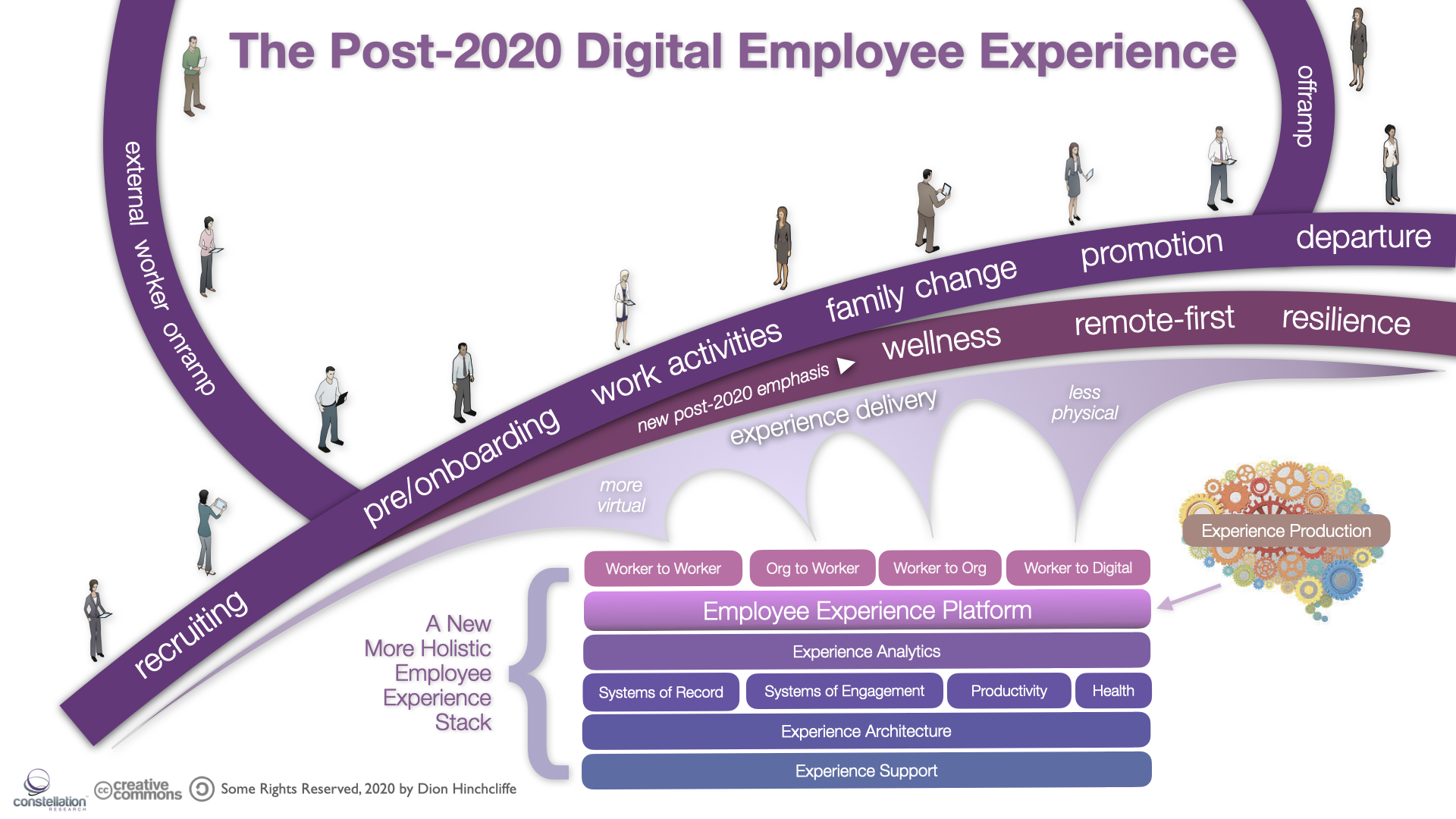
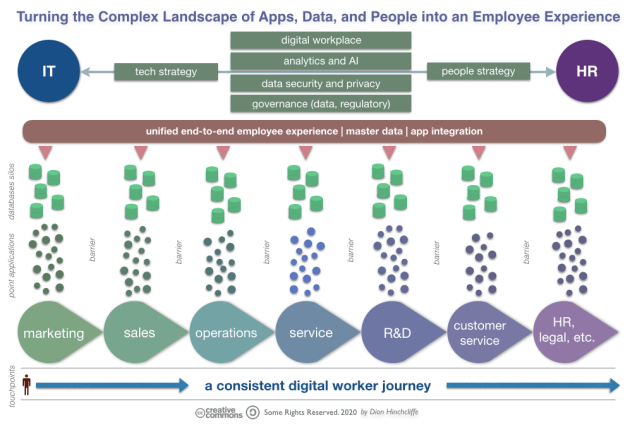

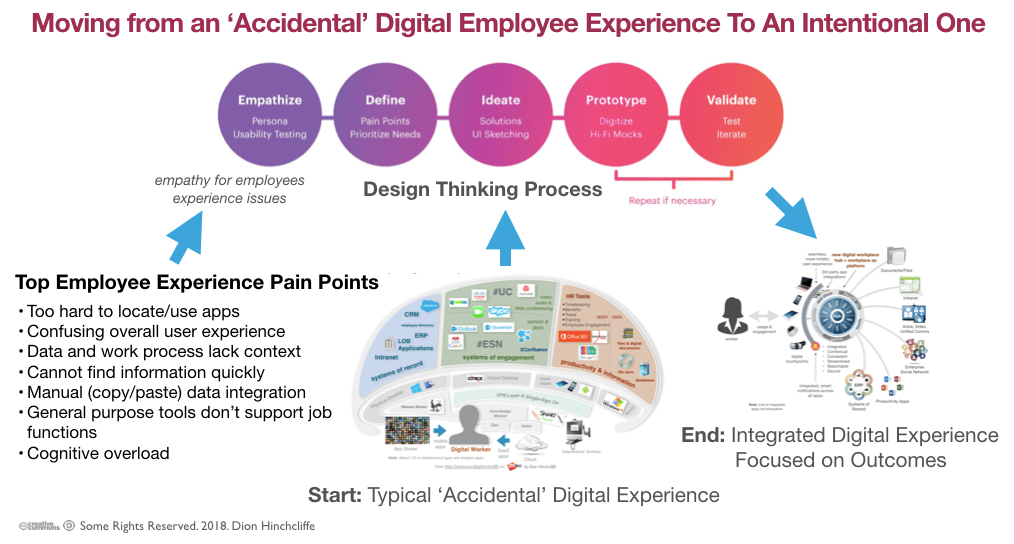
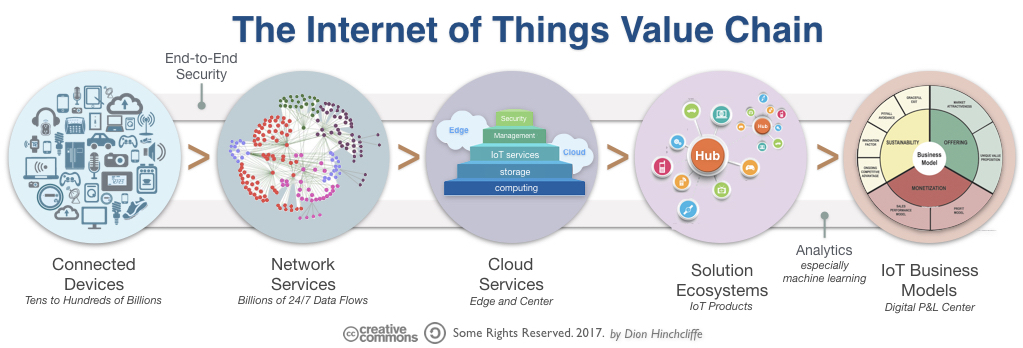
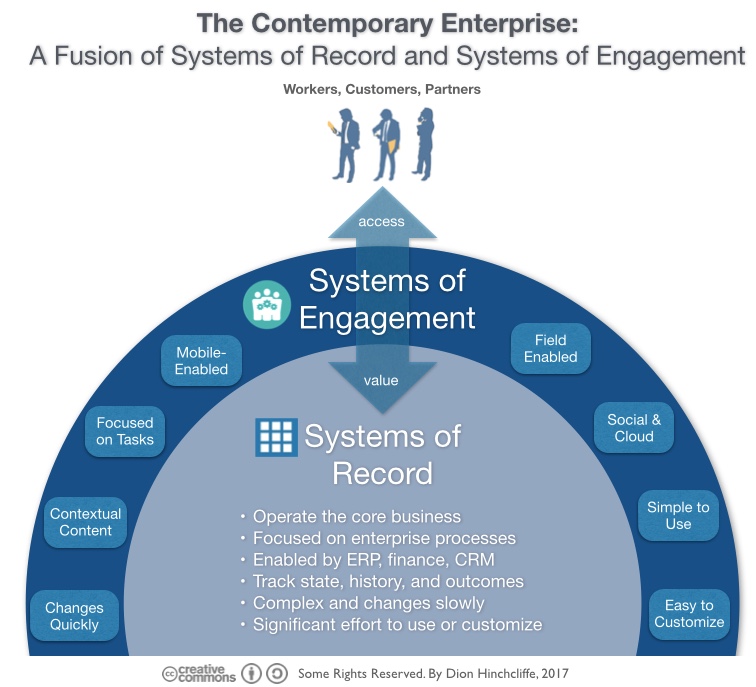
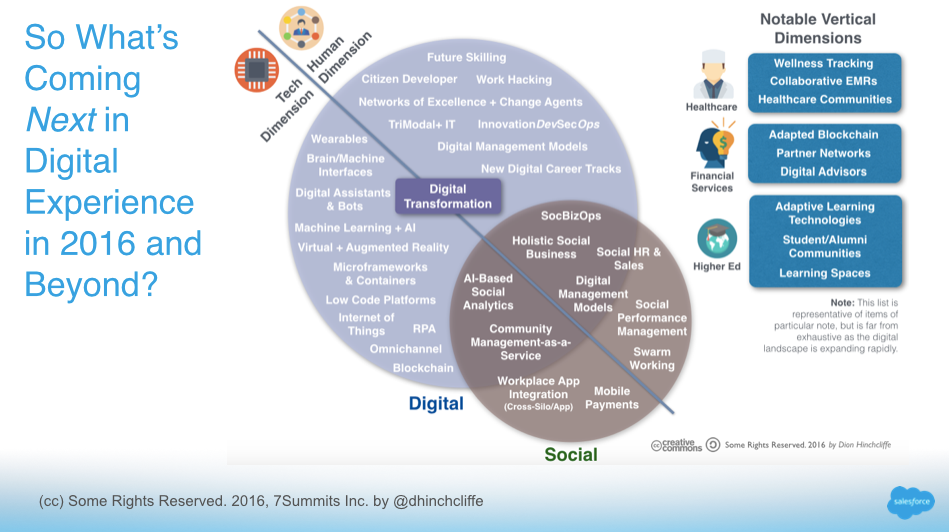
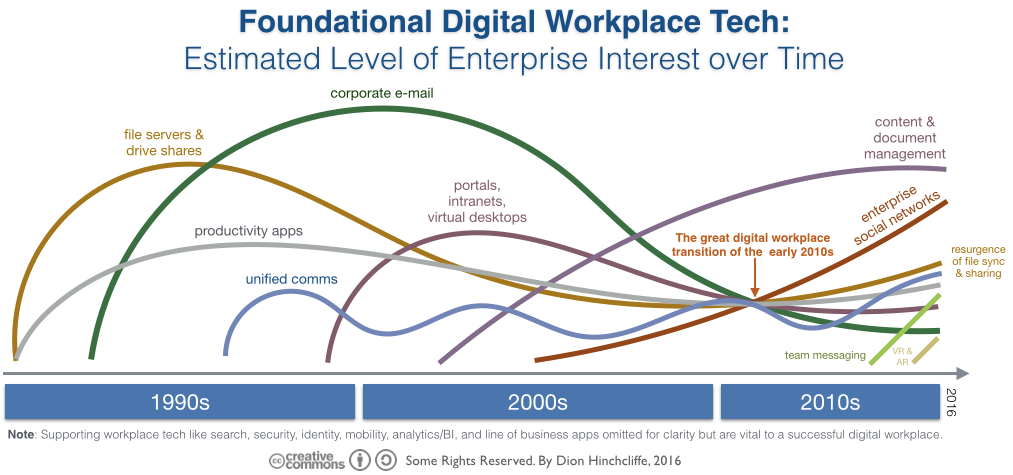






























 On Digital Strategy | Dion Hinchcliffe
